As the summer winds down, you may be thinking about how prepare. Here are some ideas for staying organized.
Create a homework space. Plan an area with the papers, pencils, erasers, pencil sharpeners, dry-erase markers and boards needed to complete nightly homework. A quiet space with no distractions is ideal, but for most families, the reality is that the kitchen table allows children to do homework while parents cook and clean, walking over to help as needed. Try creating a bin with all the items needed that can be moved from shelf to table to create a pop-up homework station. Making a privacy folder from two stapled manilla folders or a cardboard box can help reduce the urge to look up and get off-track.
Create a Study Binder
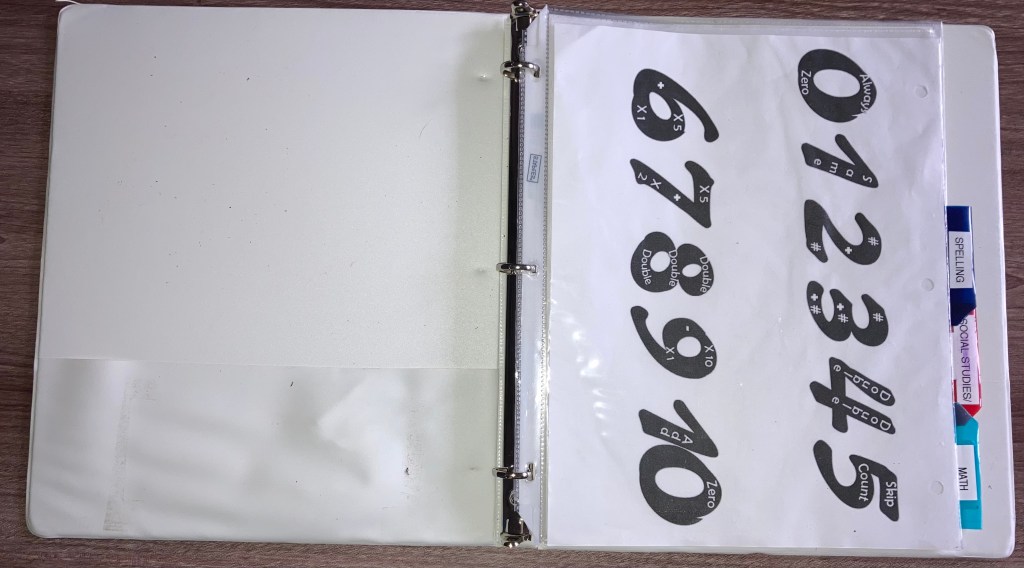
Does your child receive study guides to review at home? Create a binder with a plastic sleeve labeled for each subject. As study guides come home, slip them into their designated sleeve. Once the test has been taken, remove them. This will help you to see which subjects are missing their study guides, so you can log into your child’s online classroom to print what is needed. Keep a calendar in the binder that is just for school tests and projects. If your child reads well in the car, use this as study time each day on the way to school. It’s a great way to make sure it gets done, when your schedule is jam-packed.

Does your child have a QR badge in their binder to log in to their school-assigned study sites? You may find a time when the binder isn’t accessible, but you want your child to get in time on the platform. Take a photo of it so you always have it on your phone. Also, make a copy, “laminate” with packing tape, and attach it to the back of your child’s device with Velcro so that it’s easy to grab and swipe.
It’s also a good idea to take a photo of that badge and keep it on your phone so that if ever needed, you can just hold your phone up to the screen.
Make sure your family calendar is well-organized and color-coded. With all the extra activities, it can be easy to lose track of things. Talk to children about their homework assignments and read their homework logs to note which assignments warrant being added to the calendar.

Use this meal planning chart to help make sure that you’ll know what to prep and aren’t letting food go to waste because you forgot how many nights you’ll be eating out en route to different events.
Utilize every method you have to save time in the mornings, at least while your family is adjusting to the school schedule again. Pack kids’ vitamins in a daily organizer.
Go ahead and stock up now on some lice treatment…then just hope you won’t need it all year.
Take teachers’ supply lists literally. Those extra special supplies are tempting, but too often students will arrive with a binder that doesn’t fit in their desk, folders that are too tall for the shelf they go on, and pencil cases too small to hold all their supplies.
Check your children’s shoelaces on those new shoes you just bought them for the year. Round, synthetic laces will come undone multiple times a day, causing frustration. Flat, cotton laces stay tight much longer.
Want to help your child develop shoe-tying or other important skills? Check out:
If you want to avoid nonspecific answers to “How was your day?” when you pick up your children from school, check out this list to get ideas for more specific questions to get the conversation going.
Questions to Ask Instead of “How Was Your Day?”
Back-to-School Sleep Schedule
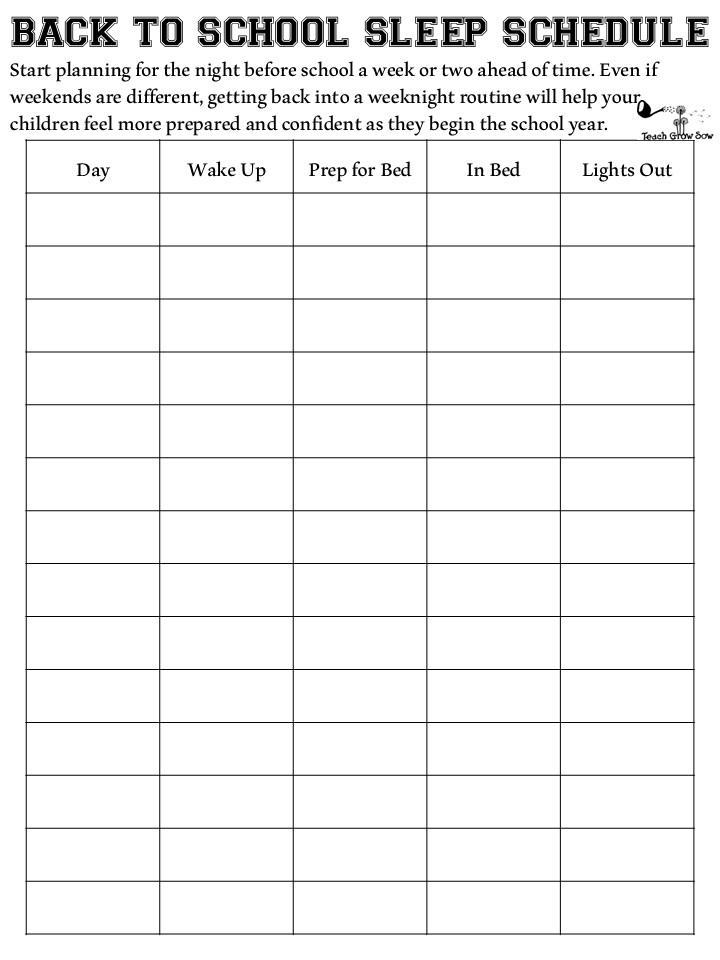
Did your children enjoy a lack of bedtime this summer and now you’re wondering how they’ll ever wake up on time for the first day of school? Start planning a week or two ahead of time to help them gradually get back on schedule with this chart. Try adjusting about 10 minutes per night.
Want to put a special note in your child’s lunch box but they’re (or you’re) not the sentimental type? Check out these free, printable kids jokes to brighten their face each time they sit down to eat.
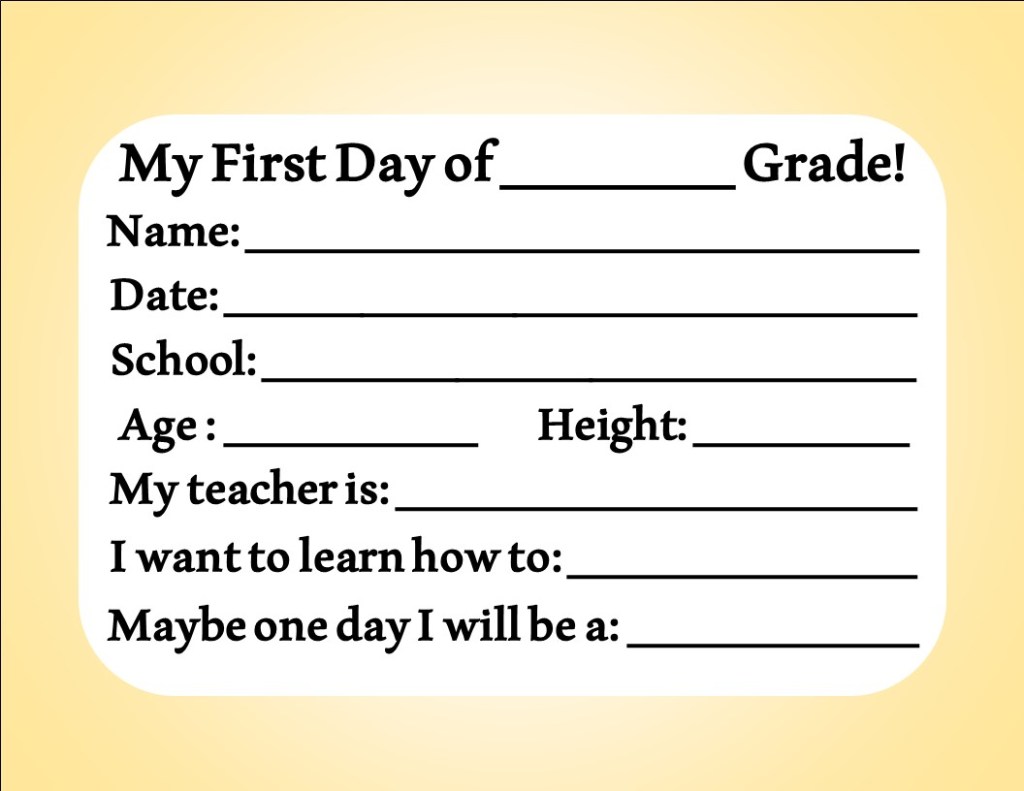
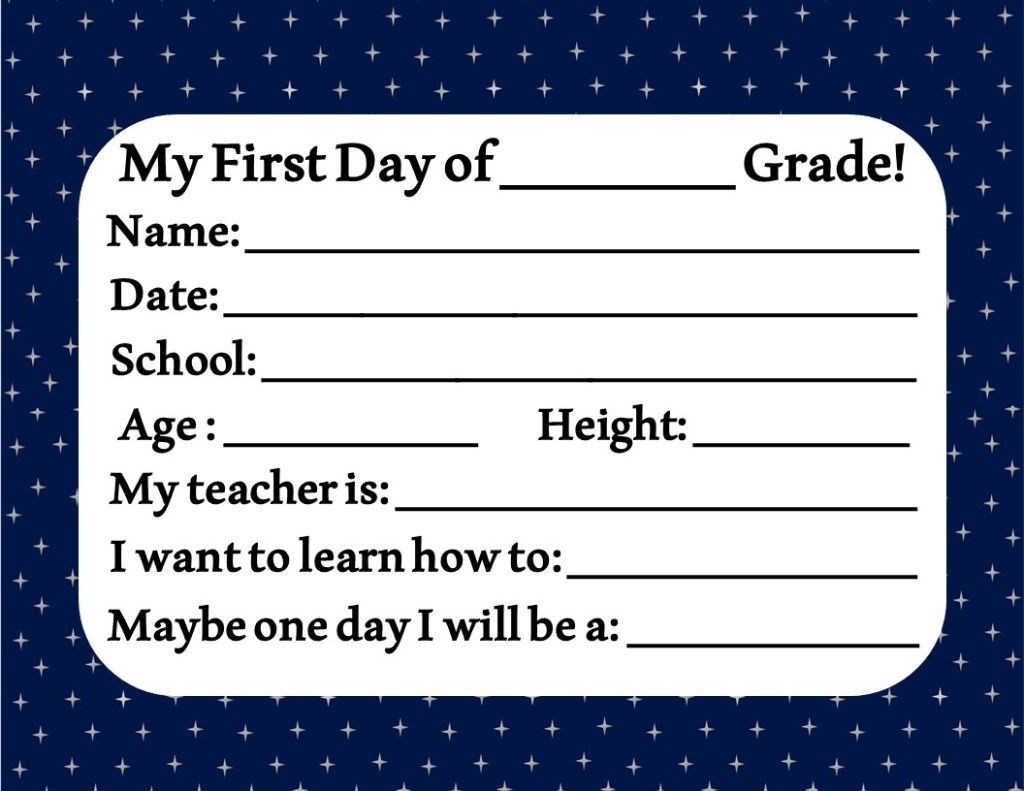
Ready to take that first day photo? Here are some free, printable signs to hold up:


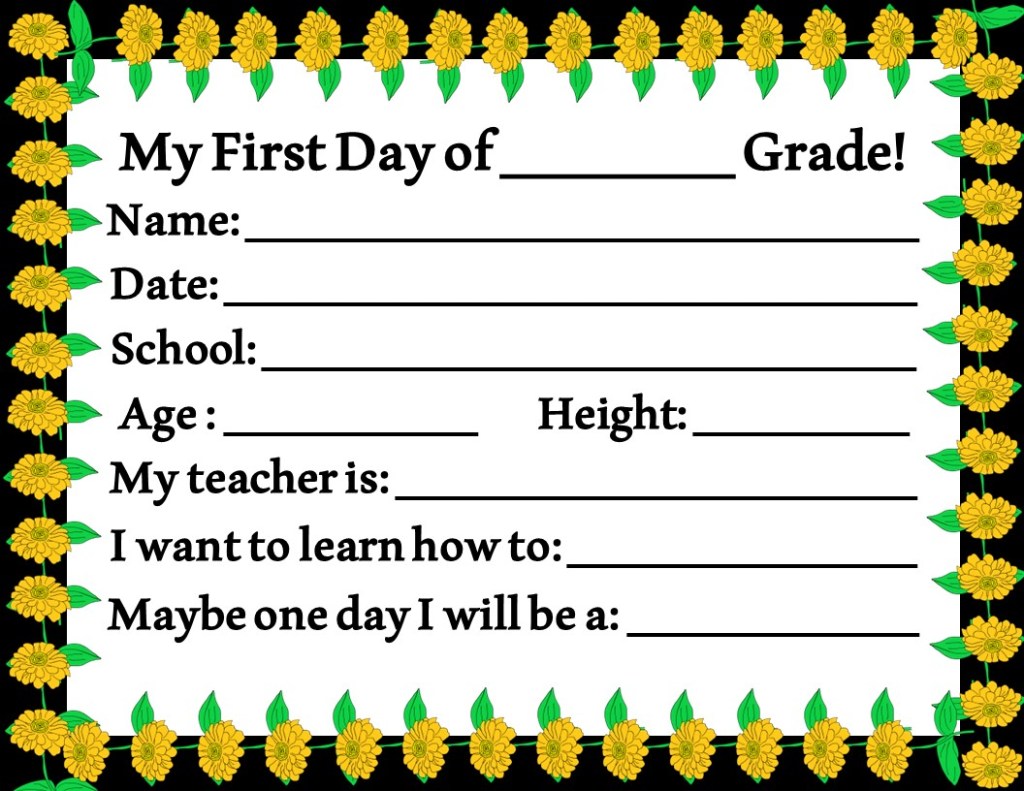



All About My Child
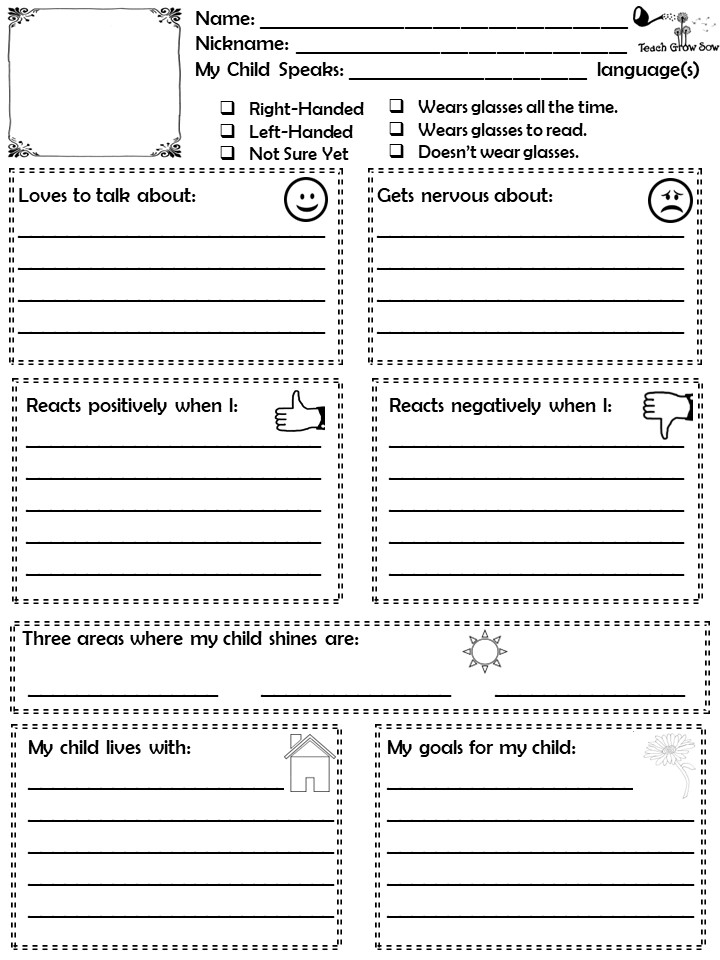
You’ll likely get something like this from your child’s teacher, but just in case you don’t, here is one you can print yourself to send in, or even just to help you brainstorm what you want to tell the teacher verbally when you meet.
Nap Mat Hack
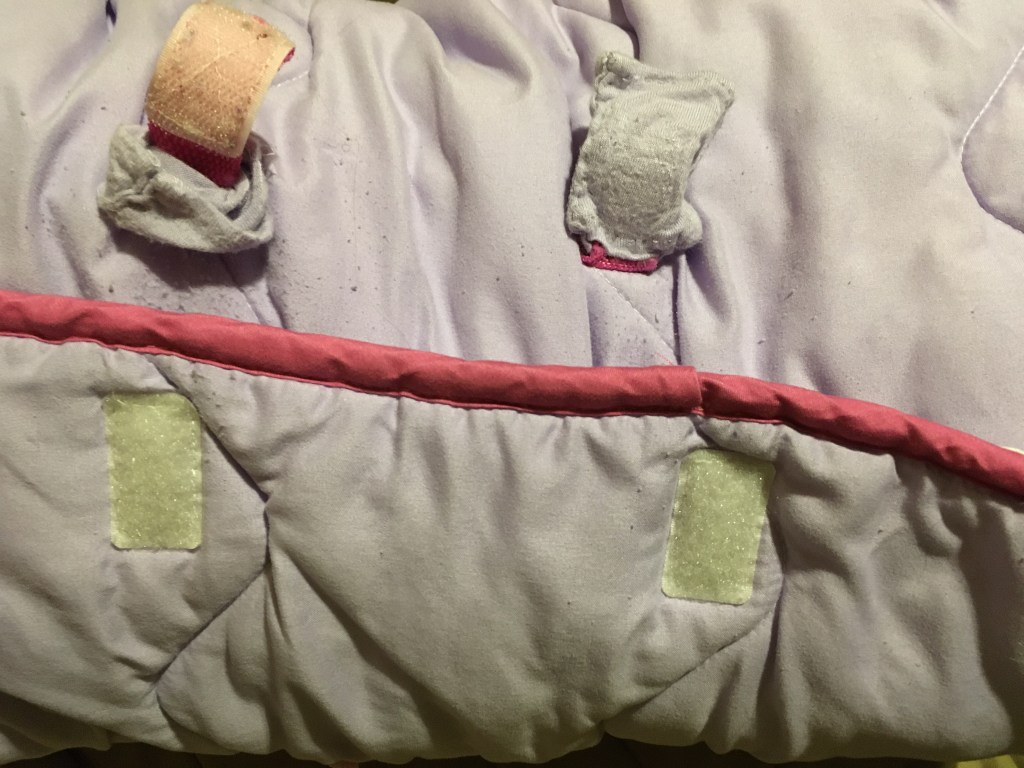
Are the Velcro flaps on your child’s nap mat destroying anything else in the laundry with it? To fix this, find some spare fabric and cut a piece just double the size of the flap. Create a tube around the flap, sewing it at the bottom and around the side, so that it can be pulled back to let the Velcro attach, then covered when it needs to be washed.
Back-to-School Conversations
Here are some important topics to have talks about before the school year begins:
- Body Safety-What is and isn’t acceptable to and from others
- Learning Differences-Some classmates may be allowed extra time on tests, to chew gum when others may not, a special seat, etc. The reason why is between the student, teacher, and parents. Don’t worry about it being fair and don’t ask questions about it.
- Knowing what information not to share with classmates (Santa, birds & bees, opinions you’ve shared in front of them that you’re not quite ready to have debates over with their classmates’ parents, etc.)
- You don’t have to be friends with everyone, but you do have to be friendly with everyone.
- Classmates are still learning how to be good friends just like they’re still learning how to do math and write well. They will mess up. Making poor choices with words doesn’t make someone a bully or mean girl. It just makes them human.
- If your old best friend has a new close friend, you don’t have to assume you’re being rejected. Three isn’t always a crowd.
- Having a new best friend doesn’t mean your old best friend has to be your enemy.
- Friends will mature at different ages. Be patient with those who become interested in boys or girls (or grow out of certain games and characters) sooner or later than you do.
- When in doubt, always ask a friend who shared something if it was meant to be private and not shared with classmates.
- Different friends are good for different things. Some friends are good for sharing private feelings. Other friends are good for enjoying mutual interests. It’s okay to have different kinds of friendships.
For more organization tips for parents, check out:
Want to get a monthly digest of all that’s new at Teach Grow Sow?
Click here to sign up for notifications on Facebook and Pinterest.
Have questions or feedback? Email:
teachgrowsow@gmail.com
 Teach Grow Sow