Where’s My Burger?
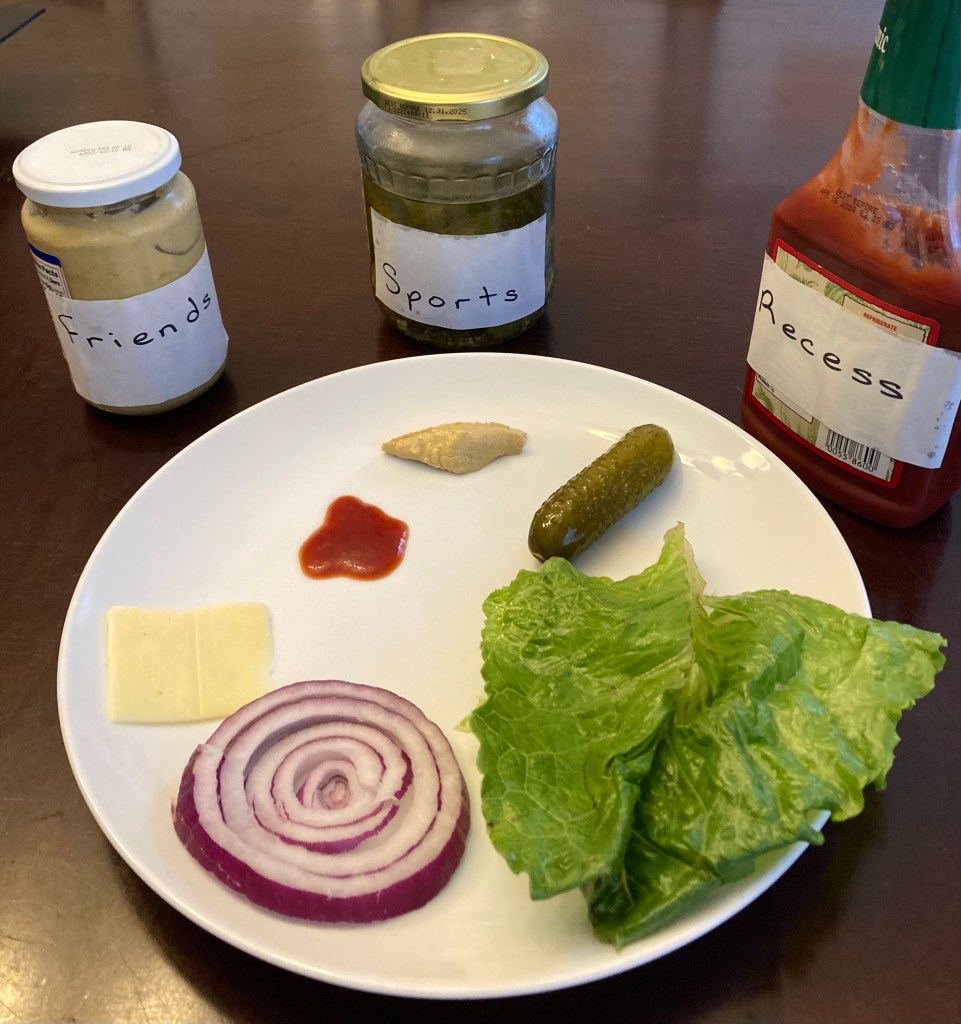
Set up several burger toppings behind a folder to keep them out of sight. Ask students what are the things they like the most about school (recess, sports, friends…perhaps fashion for the older ones) and write these onto labels to put on the toppings. Take down the folder and present a plate filled with only toppings to them. Ask your students if the burger you prepared for them looks right. What is missing? (There’s no burger or bun, just toppings.) explain that the point of going to school (the burger) is to learn. Recess, sports, and friends are all great extras that make school tastier, but they’re not the reason why school exists. If you come to school and only focus on the toppings, you miss out on a great burger.
Or, you can print these pictures onto cardstock and cut them out:
Okay & Obey
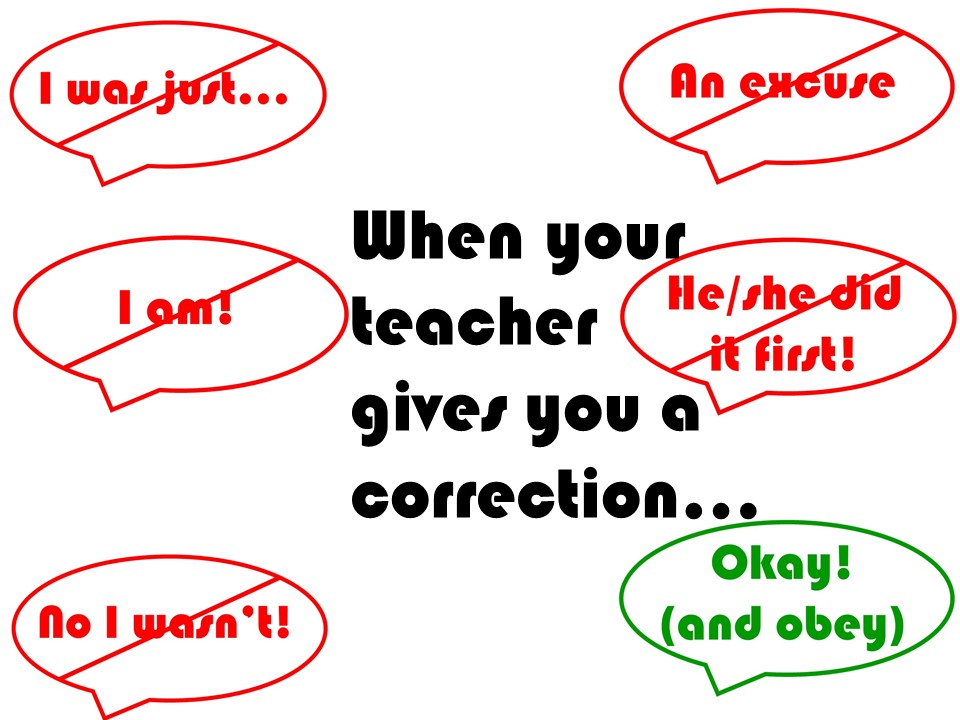
Children can often be sensitive to correction, even when it is just little things that don’t get them in trouble. To help them understand that an instruction is just that, and nothing to feel self-conscious about, use this letter to guide a conversation. Then, use these task cards to play a practice game. Hand the cards out to different students and tell them to do the item on the card at an inconvenient time. Then, read a book to the class or do an easy activity together. When someone “acts acting out,” gently ask them to stop. Their job is to say, “Okay,” then stop right away, and act like nothing ever happened. After the book or activity, talk about how there is nothing to get upset about when they do little things that need correcting. You are only giving them corrections so that the whole class can enjoy the activity to the fullest without distractions.

Foggy Goggles
Talk about wearing goggles and how it is hard to see out of them when they become foggy.
What do you do when they start to fog up? (Take them off and fix them.)
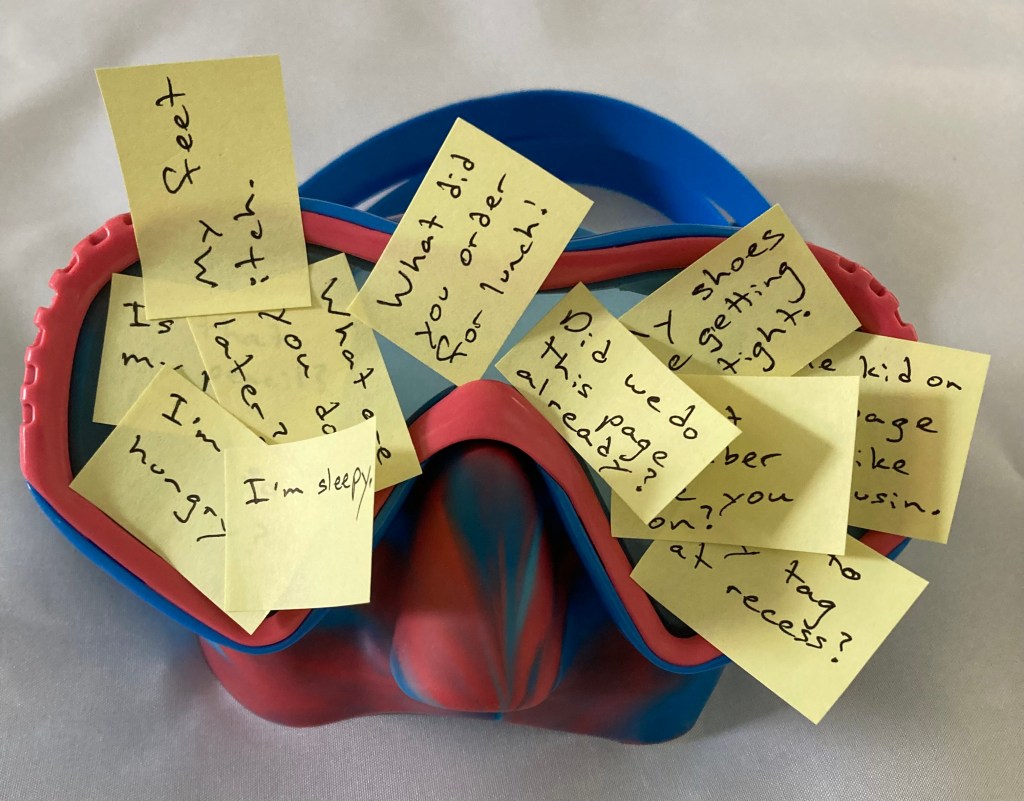
Have a volunteer put on a pair of goggles. Put comments on goggles to show how just one doesn’t block vision, but several do. (Ask for student suggestions and use sticky notes, or print the sample comments and cut ahead of time.)
This is what it is like when you start to have side conversations in class during learning time. One little comment to a classmate doesn’t keep the class from learning, but keep adding them up and then no one can hear/concentrate.
Funnel Answers
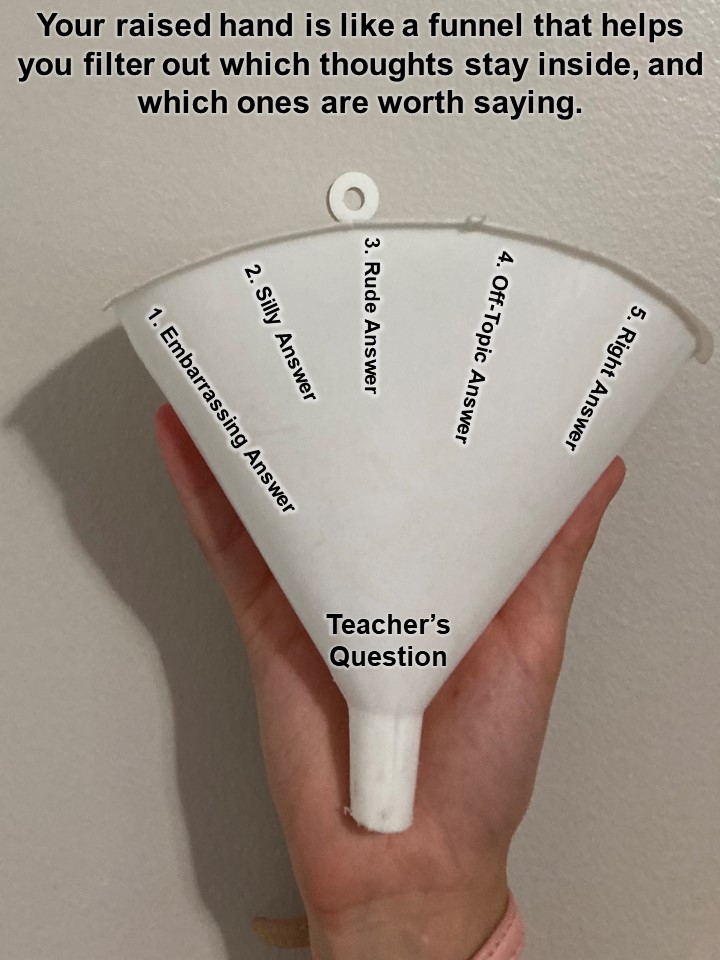
To help children understand why raising hands is expected of them in class, bring in a funnel and hold it in your hand in the air. Explain that a raised hand is like a funnel for your thoughts. When the teacher asks a question, sometimes what you call out is not what you should, or even want, to say.
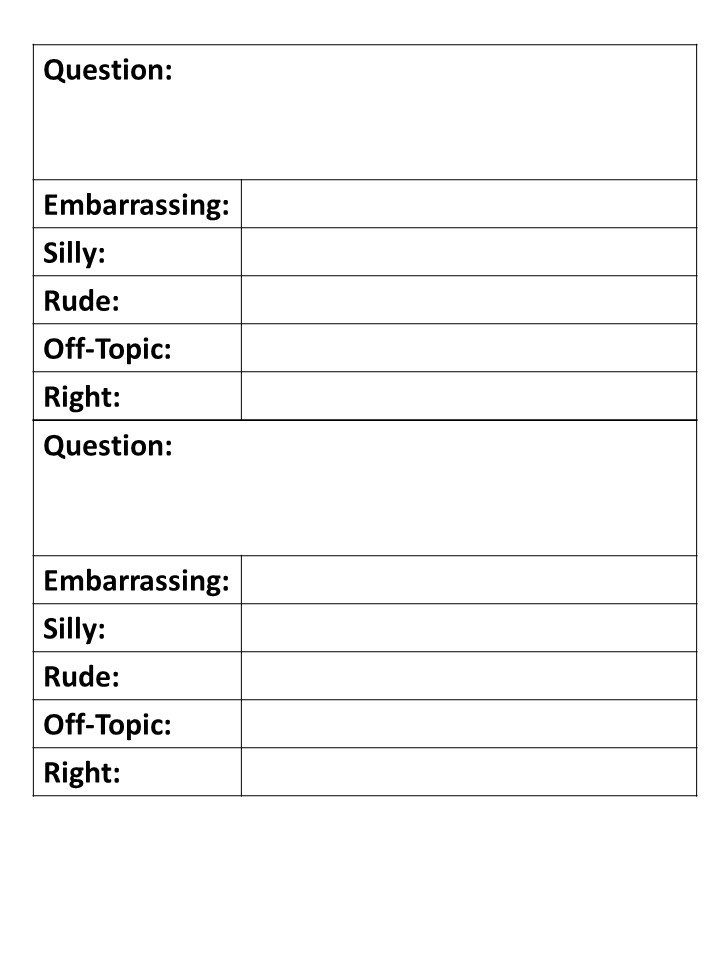
To further demonstrate this, have children make their own paper funnels. Have them write out five answers to some basic questions on the attached template. Then, have them only let the correct one through.
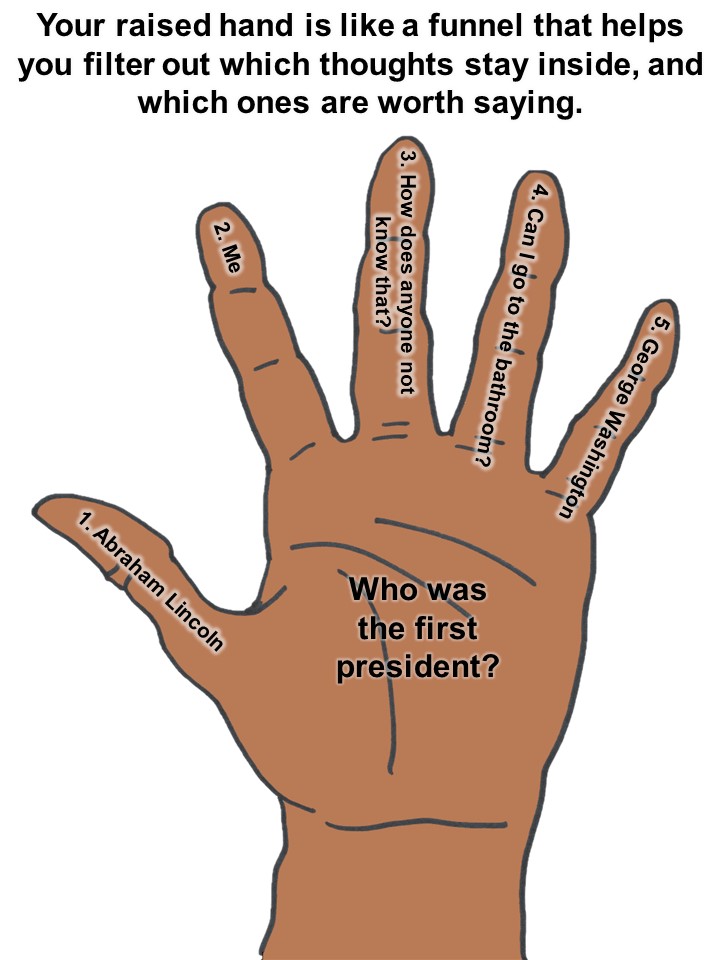
Children can also trace their hands on paper and write out their five answers. Have them demonstrate folding down the first four fingers, and only keeping up the fifth, with the correct answer.
Read the Color
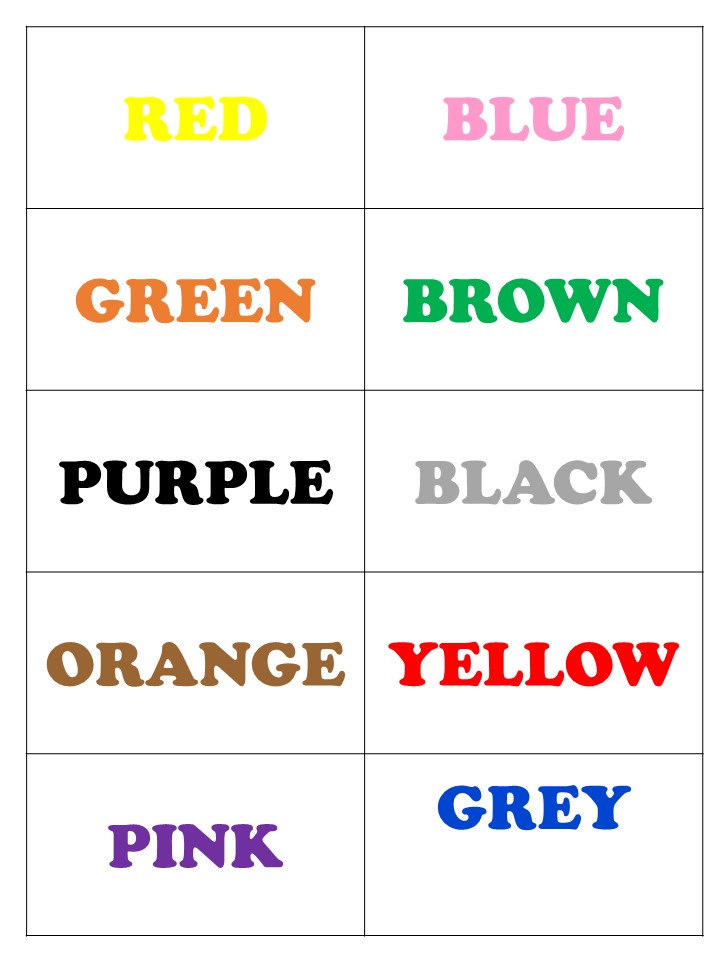
Tell students to read the word that is written and call it out as soon as they have read it. Many will call out the color the word is written in, rather than the actual word. Talk about how when they were just calling out quickly, they didn’t have time to think about what they were saying first. Do another round, having students raise their hands and wait to be called on. Point out how much their accuracy improved during this round. Ask them why it was easier to say the correct answer when they raised their hands. They had time to think about what they were going to say and stopped themselves from saying the wrong thing. Explain that raising hands can be a good way to process what you are thinking before saying it out loud.
Hold That Thought!
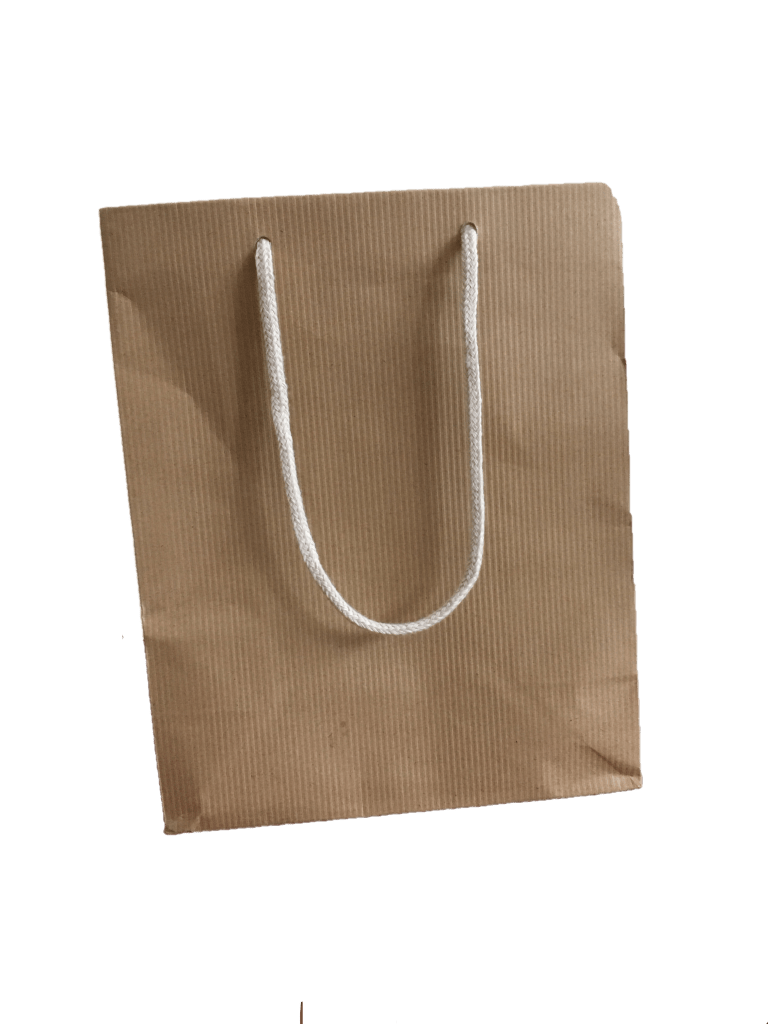
Have children bring in a paper bag with an object or picture related to a special story. Tell them you want them to share their stories with each other in pairs or small groups. When you call out, “Hold that thought!” everyone must pause in the middle of their stories until you are done. Make sure to do this when everyone is really wrapped up in sharing. Talk for a few minutes, (mini lesson, instructions, etc.), then tell students they may pick up where they left off. Everyone must resume their stories exactly where they left off. Do this several times so everyone has a chance to practice. Talk about how no matter how interesting what you’re sharing with someone is, when the teacher talks or tells you to get to work, you have to hold that thought until the next talking break.
Who You Gonna Call?
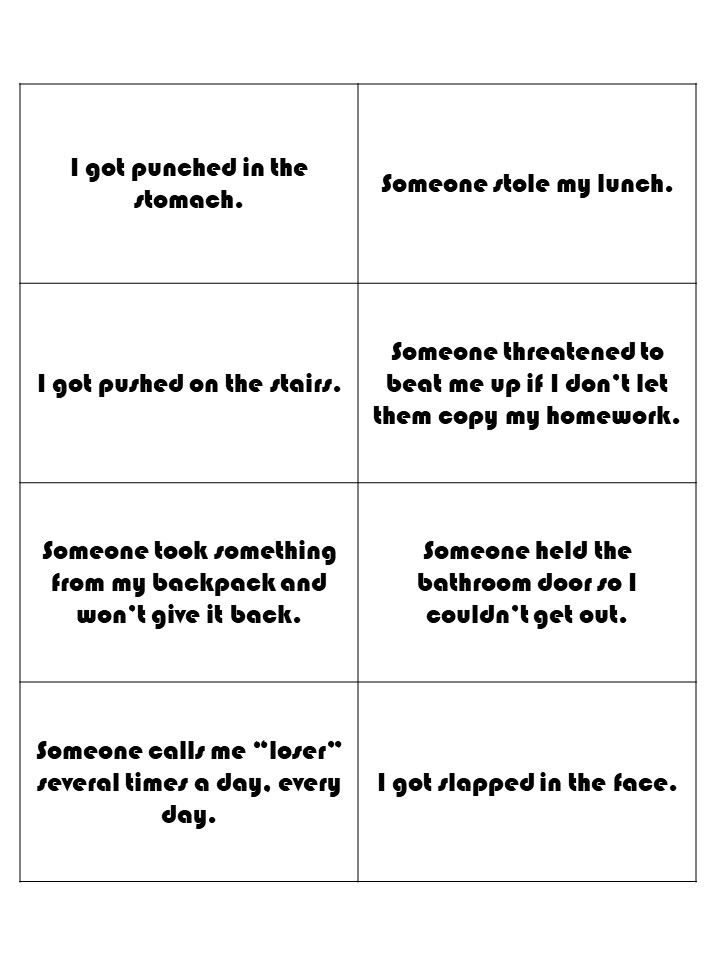
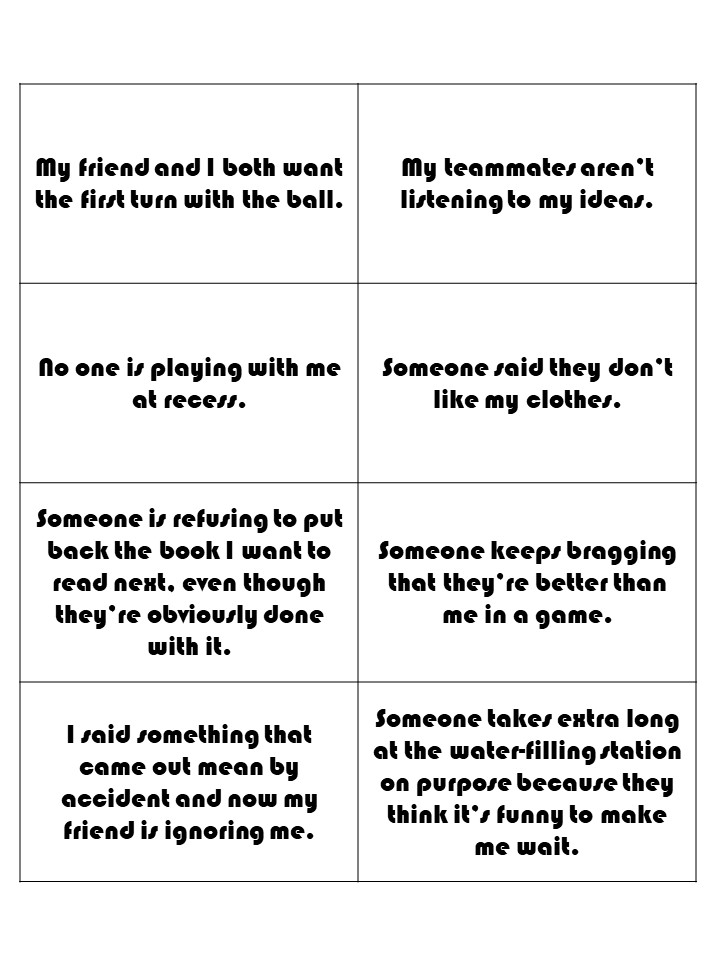
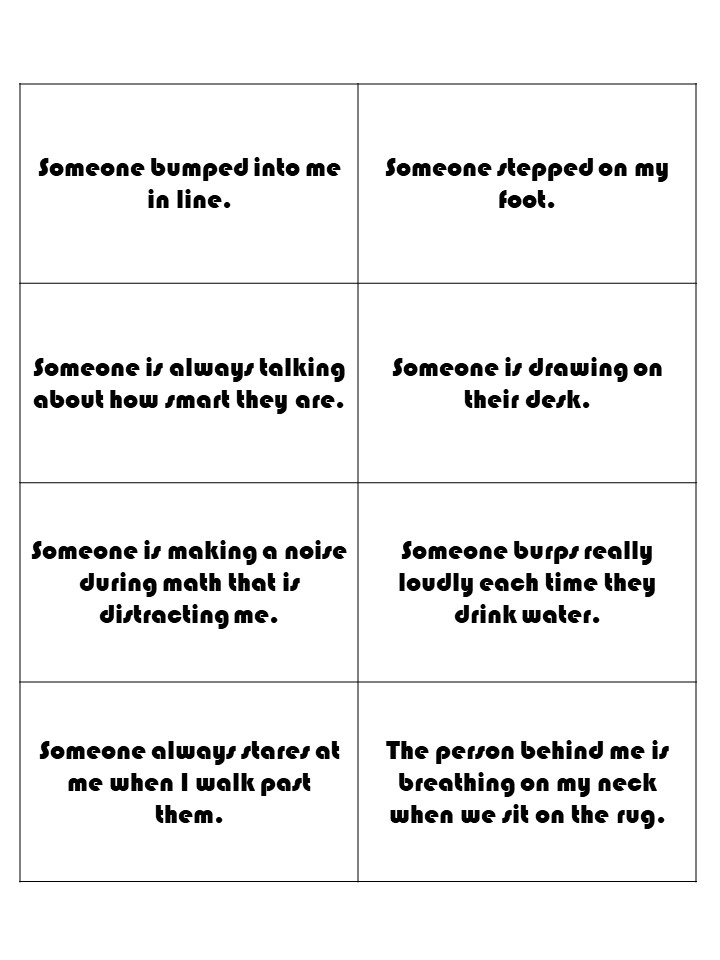
Help children talk through how to handle different situations with this game. Put up the pages with “Get the Teacher,” “Let It Go/Walk Away,” and “Handle It Myself/Talk It Out” on the wall. Print and cut out the situation cards. Have students each take a card and discuss what to do in that situation, then tape the card onto the appropriate page.
You’d Be Done by Now
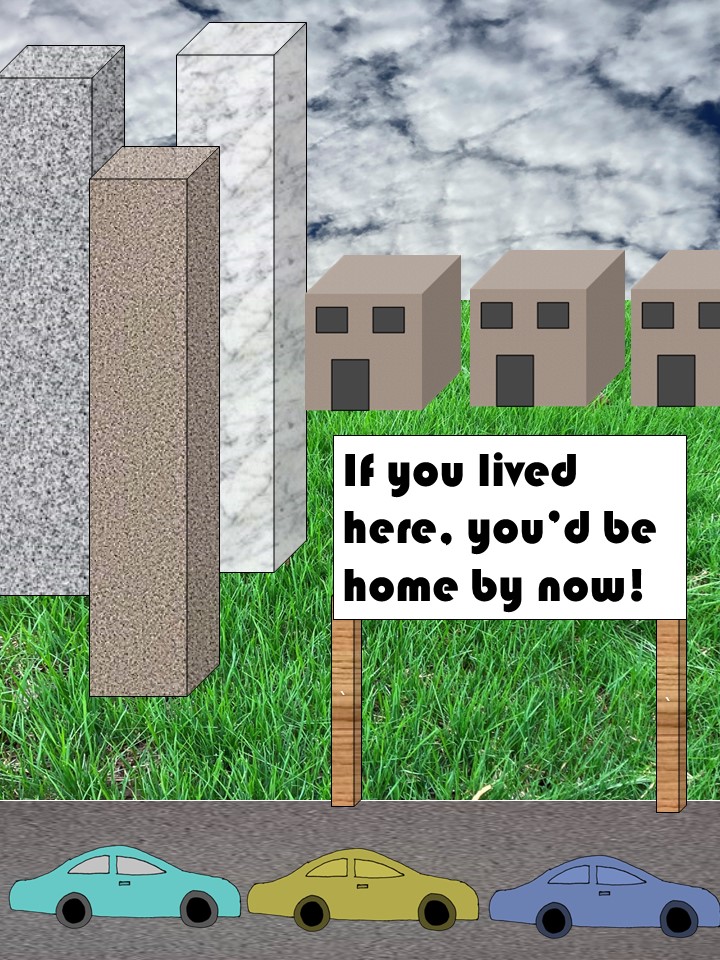

Show students a picture of an “If you lived here, you’d be home by now” billboard. Ask if they have ever seen one and explain that the building management is encouraging commuters to live in a place closer to their work, so that their trip won’t be so long. If you lived here (10 minutes from your office), instead of where you live now (an hour from your office), this is the time of day you would be arriving home, instead of still having a long commute ahead of you.
Play one of the two games in the description, delaying winning by arguing over instructions, to help students realize that if they start an assignment right away, instead of arguing over details they would be done by now.
Domino Arguments
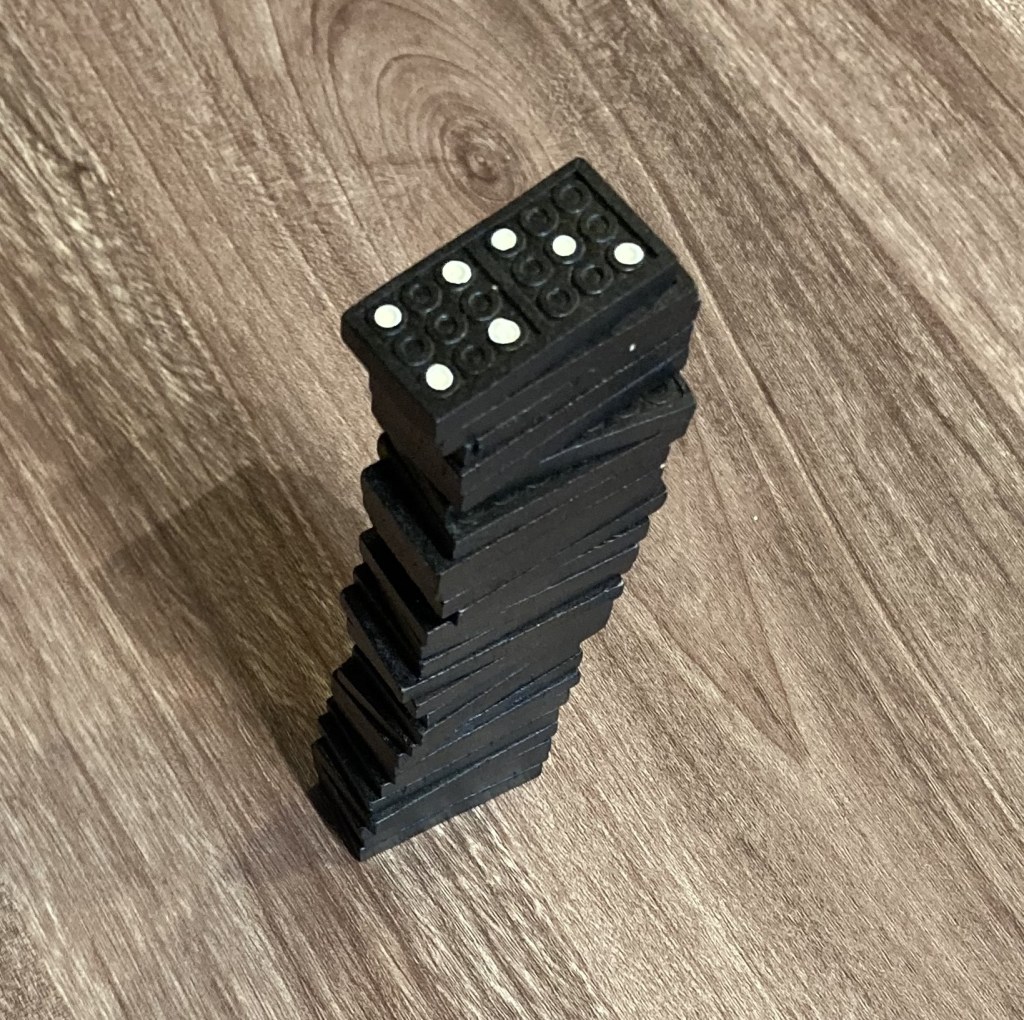
When students are trying to have the last word and their arguments escalate out of nothing, pull out the dominoes. Explain that each small comment is like one domino. You have a choice to ignore it and let it go or reply with a comeback. Place another domino on top of the first one. Each response gets added to the pile, making the argument bigger and bigger. The first comment was only a small problem. But as more and more comments get stacked on top of each other (keep adding dominoes to the stack), it soon turns into a giant argument. And just like the pile of dominoes eventually collapses, the giant argument eventually turns into something that gets both of you in trouble.
Too Many Cooks in the Kitchen
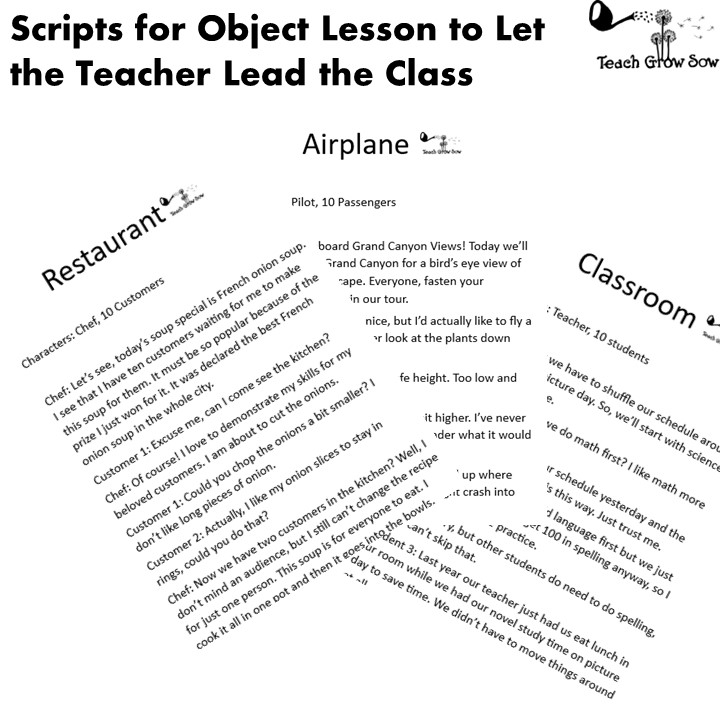
Do lessons too often get interrupted and slowed down by students who are trying to direct how things go? Tell students you are going to have volunteers read the roles in three short, silly skits. When you get to the final script, ask students afterward what the three stories all had in common (everyone was trying to give instructions to the person in charge). Talk about how much this slows things down and doesn’t get anyone what they want anyway.
Say This, Not That
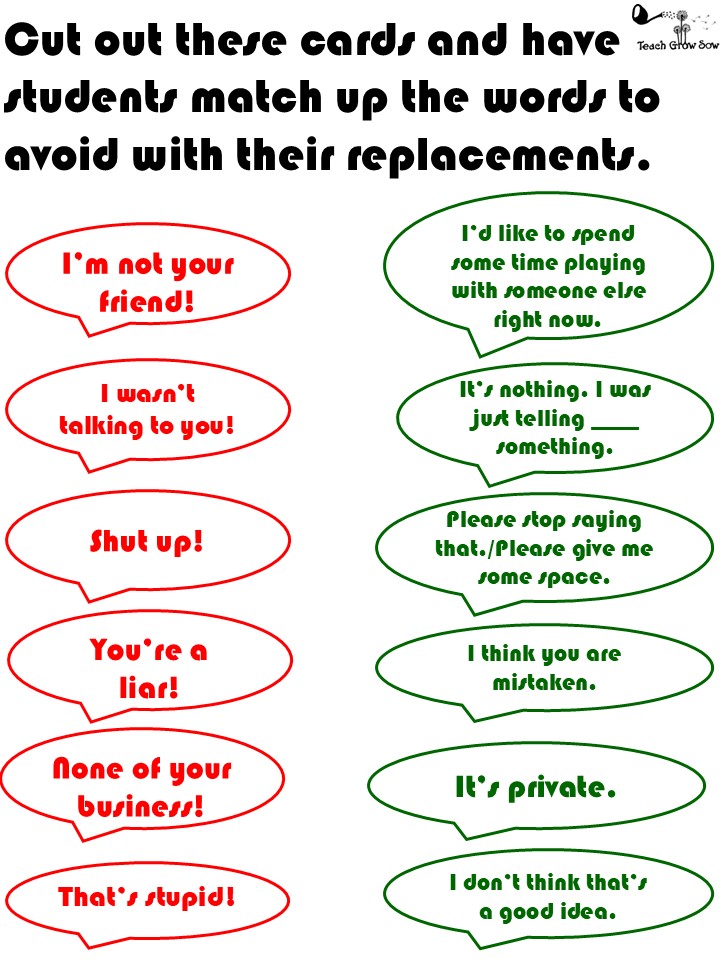
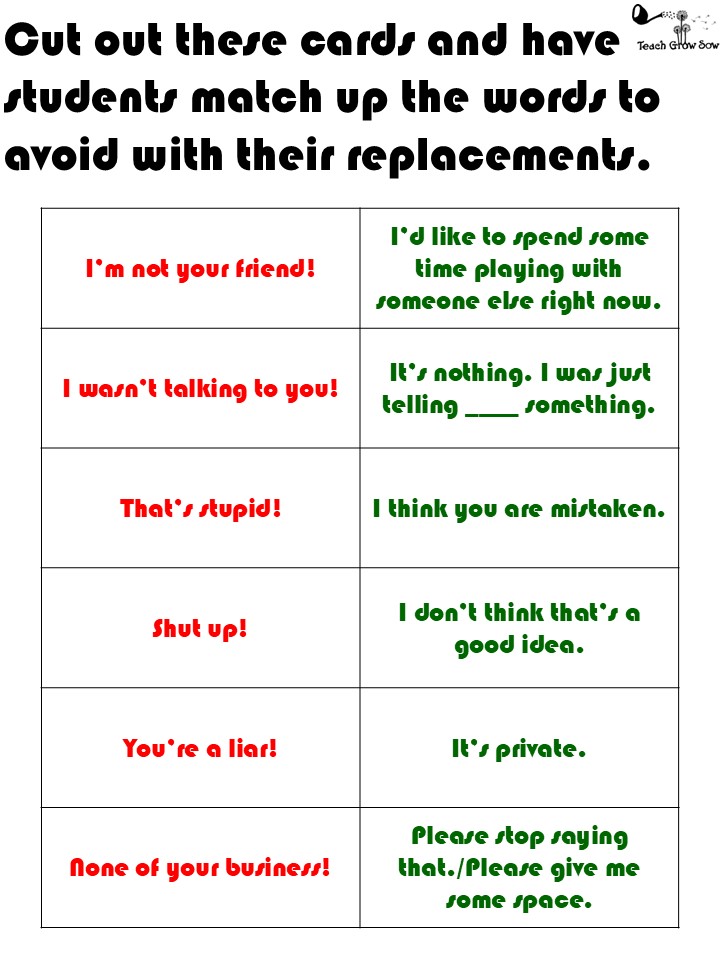
Don’t Label Others
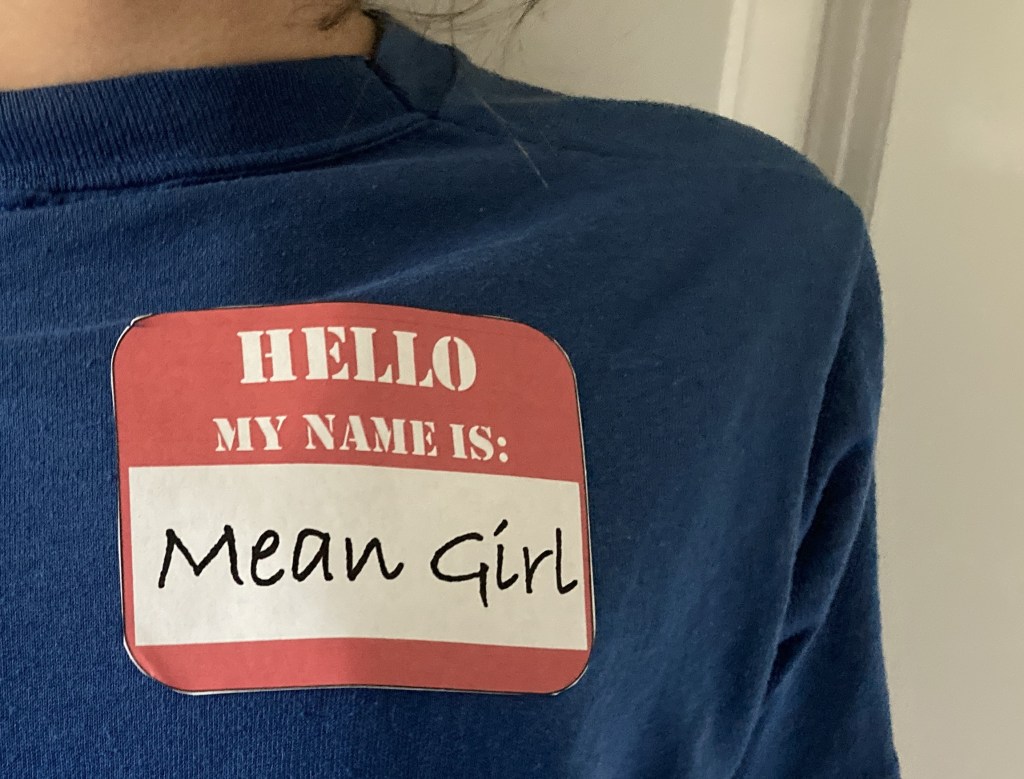
Do you want to avoid the problems that arise from students labeling each other as a bully or mean girl after one bad interaction? Use this object lesson at the beginning of the year to help remind students that all of them are still learning the rules of how to be polite, just like they are all still learning the rules of math or grammar.

Click here to sign up for notifications on Facebook, Instagram, Pinterest, and YouTube.
Have questions or feedback? Email:
teachgrowsow@gmail.com
 Teach Grow Sow